 {# Overlay logo in the middle of the banner, no layout shift #}





A full season in, Atlanta’s most expensive forward is creating the wrong kind of impact.
Atlanta's $22 Million Problem



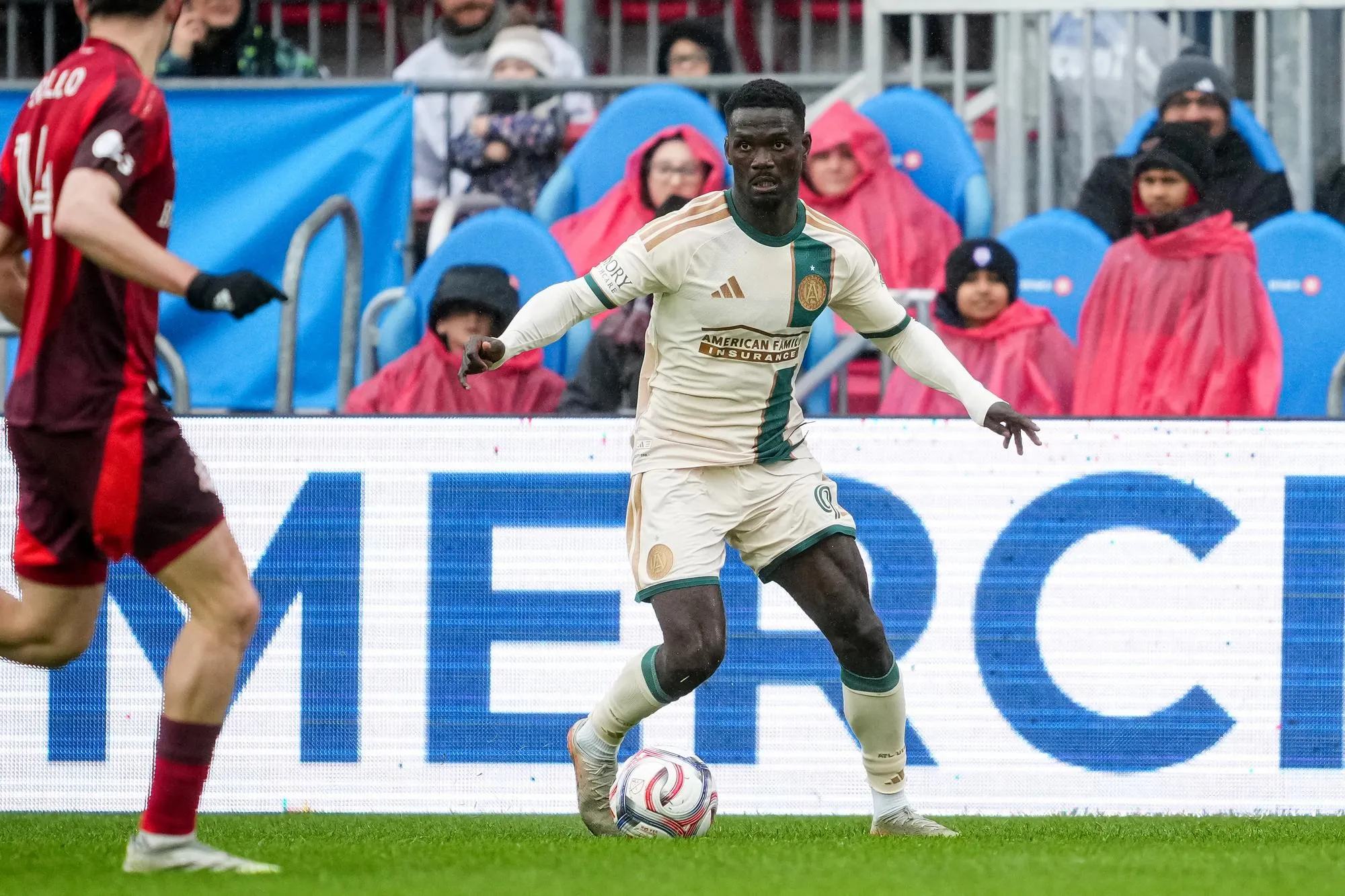
There was a moment in the last game vs Toronto - easy to miss if you were following the ball - when it showed itself again.
Atlanta had just turned possession over and the field opened in front of them. Midfielders pushed forward, the back line hesitated, and there was a vacuum of space to run into. It was the kind of moment a striker is supposed to recognize before the stadium does.
Emmanuel Latte Lath didn’t sprint into it. He didn’t bend a run across the shoulder of the last man or force the center backs to turn their hips. He jogged. The space was there. The run never came. And the chance died in the transition.
It wasn’t just an isolated lapse. It’s been there too often now to ignore.
At this point, it needs to be called what it is. This isn’t about finishing anymore. It’s about whether Atlanta’s striker is playing like a striker.
The Confidence Myth
In soccer, we often use “confidence” as a catch-all for a struggling forward. We see a player miss an open net or take a heavy touch and we label it as a lack of confidence. All strikers miss. Each will have stretches where the touch is off and the timing is late. Those issues tend to resolve themselves over time.
But what we are seeing from Latte Lath is different. These are issues that cannot be attributed to a player low on confidence.
Bad touches and missed chances are symptoms of a slump. Movement, positioning, and work rate point to something else. Latte Lath’s issues are showing up before the ball ever reaches him. Too often, he drifts into spaces that belong to Atlanta’s midfield instead of occupying centerbacks. Instead of stretching the defense, he compresses his own teammates.
The pace that was supposed to define his game - the speed Atlanta paid $22 million for - rarely dictates the match.
Beyond the Misses
The aerial moments make this harder to explain away. Heading isn’t about flair. It’s about timing, body shape, and anticipation - arriving at the right point at the right moment. Too often lately, he is a step off the flight, flat-footed instead of attacking it, out of sync with the delivery.
It keeps happening. If it’s the same miss, in the same way, over multiple matches, that usually means the player and what the team is doing don’t fit.
The heading is only one part of it. The larger concern is what happens before the ball ever reaches the box. Latte Lath is too often deeper than the attack needs him to be, occupying spaces Atlanta’s midfield already owns instead of stretching the center backs.
That is where this inevitably circles back to Coach Tata Martino.
If this is by design, then Atlanta is choosing to use him as a link-up player. But that role requires runners beyond him - a second striker or consistent vertical threat to play off. Right now, that structure isn’t there. And neither is the output. He isn’t providing goals, and he isn’t creating them.
If this movement is not by design, then it is on Martino to fix. Because this is not occasional drift. It is consistent behavior across ninety minutes, and it is pulling the attack in the wrong direction.
When the Role Doesn’t Fit
A team can carry a striker who is missing chances, for a time. You can survive a cold streak if the forward is still forcing defenders to respect the space behind them.
What is harder to carry is a striker who alters the shape of the attack in the wrong direction. When Emmanuel Latte Lath drops deeper, passing lanes narrow. Defenses step higher without fear of being exposed. The space doesn’t open up. It closes down around them.
Tata Martino and the Atlanta front office now face a clear reality. Tactical adjustments are still available - simplify the role, keep him higher, add a second runner. But this is not a temporary issue. It has been a full season. And at that point, it becomes a roster decision: bench him, move him, or buy out the contract.
The $22 million is a number that follows him every time he jogs toward the halfway line. It is the price of expectation, and right now, the weight of it seems to be slowing him down.
Latte Lath was brought in to expand the game. Right now, he is making it smaller.


Comments
Comments and reactions are powered by GitHub Discussions. A GitHub account is required to comment, reply, or react. You will be asked to authorize Giscus to post through your GitHub account. Comments are screened automatically. Personal attacks, discriminatory language, threats, spam, and comments unrelated to the article will be hidden or removed.