 {# Overlay logo in the middle of the banner, no layout shift #}





Stability or Speed: Resolving Atlanta's DP Dilemm
The Chaos Engine: A New Utility for Almirón



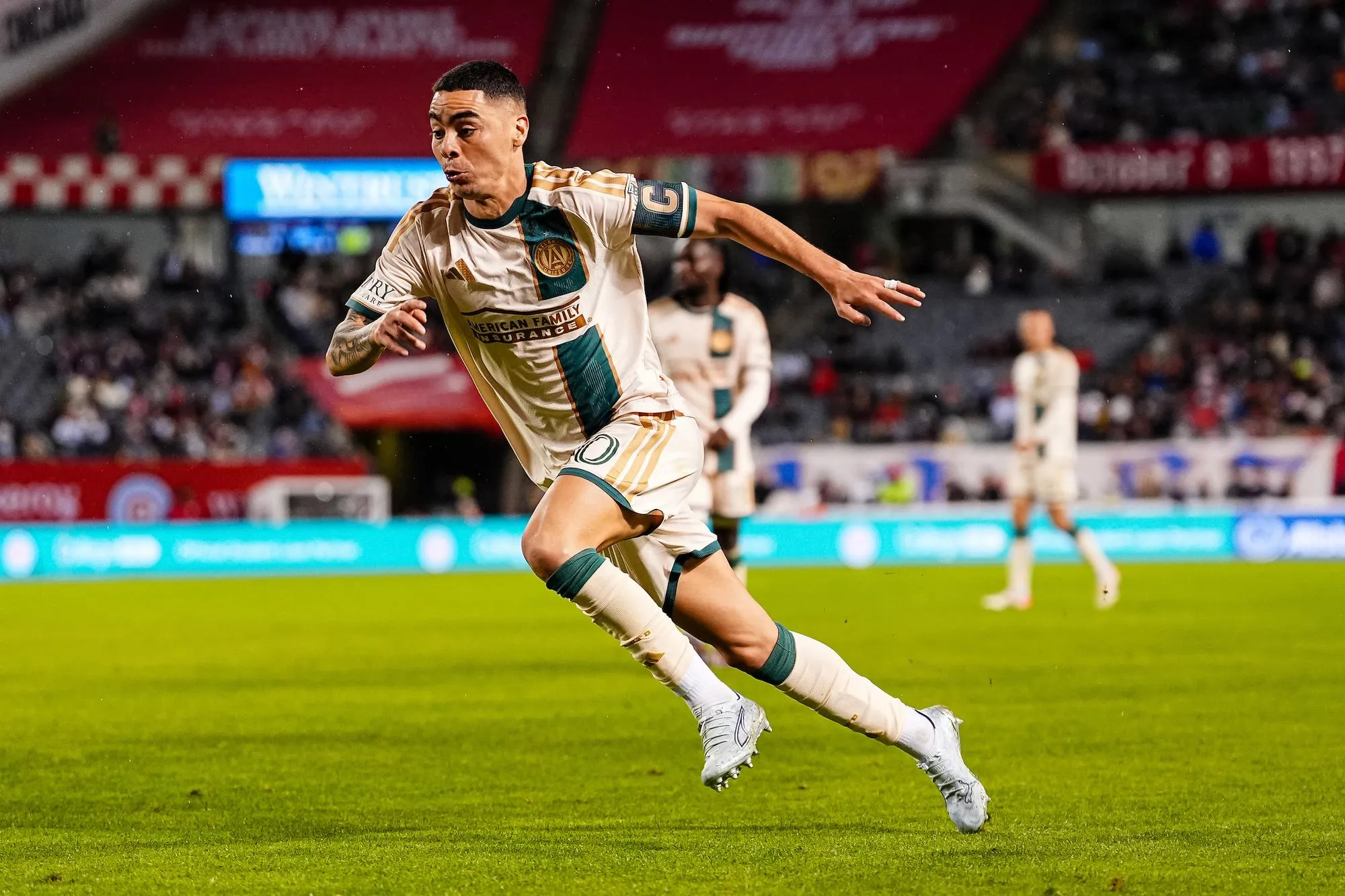
Miguel Almirón was listed as questionable leading into last week’s match against Montréal, and a definitive update for Saturday’s game is not expected until tomorrow. Regardless of his official status, his eventual return to the matchday squad marks the end of a unique experimental period for the club.
In his absence, the team has found a tactic that does not rely on his specific brand of directness. As the data from the recent shift to Miranchuk shows, the transition to Alexey Miranchuk as the primary reference point has stabilized the attack, moving from inconsistent swings in shot quality to a more predictable, box-centric output.
If the goal is to sustain this control, Almirón’s return from injury should not automatically result in a return to the starting XI.
A shift in tactical demand
Instead, Atlanta has the opportunity to redefine his role. Rather than asking him to organize the first sixty minutes of a match - a task Miranchuk is currently performing with higher efficiency - the club can use Almirón as a second half disruptor.
The current system relies on Miranchuk’s ability to hold the ball and allow structure to form. Almirón’s game is built on the opposite: immediate progression and high-speed verticality. In the first half, when defensive blocks are fresh and organized, that speed often runs into set lines. We saw this in the early season phases where possession was high at 58.4% but decisive chances were rare, leading to a consistent underperformance relative to expected goals.
By introducing Almirón in the 60th minute, the conditions change:
- The space is wider: Opposing midfields naturally stretch as fatigue sets in.
- The pressure is slower: The second touch that Almirón now requires is easier to take when defenders are no longer closing gaps at full speed.
- The defensive expectations are broken: Switching from Miranchuk’s controlled tempo to Almirón’s “chaos engine” forces a defense to adjust their spacing mid-game.
Managing the DP reality
To understand the current shift in Atlanta’s form, one must look at the squad through a tactical lens rather than a financial one. Disregarding the specific cap hits and transfer valuations, the question becomes how to best deploy the available talent to maintain the team’s newfound stability.
Almirón remains under contract through 2027, with a club option for 2028. As a Designated Player, the traditional expectation is that he starts every match when healthy. However, the club must decide if the priority is honoring that tradition or maintaining the structural consistency that has finally begun to yield results.
If Almirón returns to the central role immediately, the ball stops moving through Miranchuk as the sole outlet. The team reverts to a hybrid style that, earlier this season, proved to be unstable with a shot quality that fluctuated between 0.059 and 0.244 xG per shot.
Almirón’s potential move to the bench serves the tactical interests of a team that has finally found its shape. He remains a potent weapon for the club, yet his speed is most useful as a disruptor once the foundation of the match has been established through the captain’s composure.
The most cohesive version of this squad relies on a clear transition between these two styles of play. A match defined by Miranchuk’s stability in the first hour creates the specific conditions where Almirón’s directness is most likely to result in goals.
Comments
Comments and reactions are powered by GitHub Discussions. A GitHub account is required to comment, reply, or react. You will be asked to authorize Giscus to post through your GitHub account. Comments are screened automatically. Personal attacks, discriminatory language, threats, spam, and comments unrelated to the article will be hidden or removed.