 {# Overlay logo in the middle of the banner, no layout shift #}





MLS, the NWSL, MLS NEXT Pro, and USL do not provide the same medical rules, contractual protections, or public information.
How Concussion Protocols Differ Across American Soccer

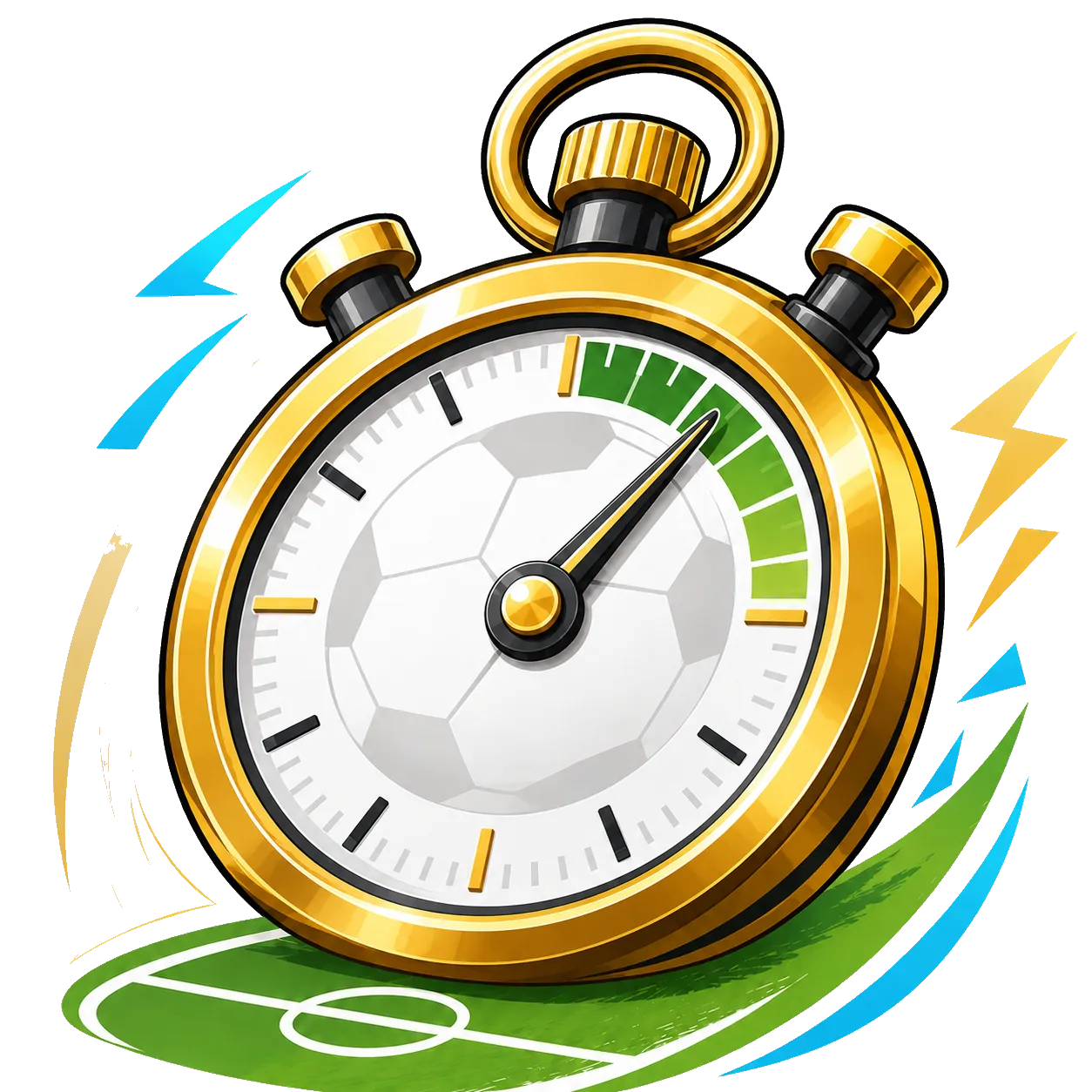


When a player takes a blow to the head, everyone in the stadium sees the same basic sequence. The referee stops play, medical staff come onto the field, and the player is evaluated. If the player has to come off, a concussion substitution allows the team to make a replacement without using one of its normal substitutions.
That visible part is similar across American professional soccer. What happens during the evaluation, after the match, and before the player returns can depend on the league and the player’s contract.
The Laws of the Game govern the substitution. Each league sets its medical procedures. A collective bargaining agreement can add requirements for baseline testing, second opinions, return-to-play clearance, and complaints when the protocol is not followed.
Those layers are easier to examine in some leagues than others. The NWSL provided its complete 2026 protocol for this article. MLS publishes a detailed matchday checklist. Its full post-diagnosis process remains unavailable. The answers are harder to find in MLS NEXT Pro and USL, where current medical rules and labor protections are either incomplete or unavailable to the public.
The substitution is only the first step
The additional permanent concussion substitution became part of soccer’s Laws of the Game in 2024. Competitions that use the rule allow each team to replace one player who has suffered a suspected concussion. The change does not count as a normal substitution or use one of the team’s substitution windows.
Once the substitution is made, the injured player cannot return to the match. That includes a possible penalty shootout. The opposing team receives another substitution and an additional window to use it. A team can make the change after an evaluation on the field, after a more complete examination away from the field, or later if symptoms appear after the player has returned. The referee manages the substitution, while the medical staff decide whether the player can continue.
The rule makes it easier to remove someone with a possible head injury without leaving the team short-handed. What it does not explain is how that player should be evaluated, who makes the medical decisions, or what must happen before the player can return to competition.
How MLS Handles a Suspected Concussion
MLS’s public material gives a fairly clear picture of what happens during a match. It provides much less detail about the days after a concussion is diagnosed.
The 2026 MLS Competition Guidelines allow each team to make one permanent concussion substitution during the regular season. The playoff section says each team receives two. MLS did not respond to a question about the discrepancy. The current IFAB protocol permits a maximum of one.
MLS publishes its staffing requirements in its health and safety resources. The Game Day Concussion Checklist explains how a suspected head injury is evaluated.
MLS requires at least two certified athletic trainers or therapists on each bench. The home team must also have a physician on its bench. Visiting teams are encouraged to bring their own physician, but it is not required. Every match must also have a Venue Medical Director and two ambulances equipped for advanced life support.
The Venue Medical Director is a physician with fellowship training and certification in sports medicine. The physician makes the final decisions about the evaluation and care of suspected head injuries in consultation with the club medical staff. The Venue Medical Director also provides an impartial medical opinion when the visiting team does not bring its own doctor.
A medical professional trained by MLS serves as the league’s medical spotter. The spotter watches live video of the match and can review an incident from several angles. The spotter sends video and observations to the Venue Medical Director but does not diagnose the injury. If the spotter sees one of the protocol’s mandatory warning signs, the player must receive an assessment on the field.
The checklist starts with an evaluation on the field or along the sideline. Warning signs such as a loss of consciousness, problems with motor coordination, or seizure activity lead to a more complete examination away from the field. That examination includes the SCAT6 and a full neurological assessment.
A player cannot return when a concussion is diagnosed or medical staff still suspects one. If they believe the player can continue, the Venue Medical Director must review the available video and agree with the team physician. The player should then be monitored for the rest of the match and assessed again within 24 to 48 hours.
The MLS and MLS Players Association collective bargaining agreement also covers how concussions are handled. Article 9.10 requires suspected and diagnosed concussions to be managed under a protocol designed by MLS and agreed to by the MLSPA. Medical examinations may include preseason baseline testing, and the agreement says medical professionals owe their primary duty to the player. A player can also obtain a second opinion or use an independent physician when a disagreement over treatment or fitness cannot be resolved.
The CBA identifies the complete concussion protocol as Exhibit 12, but the exhibit is missing from the public version of the agreement. MLS’s public pages explain what happens during a match without listing each step a diagnosed player must complete before returning to full training and competition. Nothing MLS has made public establishes an automatic absence of seven days, one match, or any other fixed period. A player’s placement in concussion protocol therefore does not reveal the severity of the injury or predict when he will return.
How the NWSL Handles a Suspected Concussion
The 2026 NWSL competition rules allow each team to make one permanent concussion substitution. The concussion substitution does not count as a normal substitution or use one of the team’s substitution opportunities. The opposing team receives an additional substitute and another opportunity to use it.
The NWSL and NWSL Players Association collective bargaining agreement adds medical and contractual requirements beyond the substitution rule. The league must review its concussion protocol each year using current evidence-based research and consult the NWSLPA before putting any changes into effect. According to the NWSL, its chief medical officer and clinical neuropsychologist conduct that review.
If the NWSLPA believes a member of a team’s staff did not follow the concussion protocol, it can file a written complaint with the NWSL. The league’s sports medicine or medical director then has two weeks to investigate. The commissioner and the NWSLPA must receive the findings within three weeks after the complaint is filed.
The CBA requires preseason testing that gives doctors a baseline for comparison after a possible concussion. The NWSL protocol uses two assessments to establish that baseline.
The Sport Concussion Assessment Tool, known as SCAT6, checks symptoms, memory, concentration, balance, coordination, and neurological function. ImPACT is a computerized test that measures memory, attention, processing speed, and reaction time. Contracted players complete both assessments before their first training session. Trialists and amateur players initially complete only the SCAT6. They add ImPACT testing if they remain with the team for more than seven days.
During matches, a league medical observer watches remotely and sends video and observations to the home-team physician. A possible concussion leads to an immediate examination that includes checks for symptoms, memory problems, loss of consciousness, and other signs of a serious head or neck injury. If medical staff clear the player after that examination, she must still complete a brief exertion challenge before returning.
If the initial examination raises concerns, the player is taken to a quiet area away from the pitch for a more complete evaluation. The home team’s sports-medicine physician administers the SCAT6 and decides whether other testing is needed. A concussion diagnosis or any remaining suspicion ends the player’s match. She also cannot return without completing the required evaluation.
The return-to-play process begins with 24 to 48 hours of relative rest. The player then progresses through light aerobic exercise, moderate aerobic exercise, soccer-specific work without heading, non-contact training, full-contact training with heading, and a return to competition. The protocol recommends that a player remain symptom-free for 24 hours before advancing, although the team physician may adjust that timing based on the player’s symptoms and medical history.
Before returning to full-contact training, the player must be evaluated by an NWSL-approved clinical neuropsychologist. Her results on tests of memory, thinking, vision, and balance must meet or exceed her preseason baseline.
The protocol does not set a fixed timetable for a player’s full return. She advances based on her symptoms and test results. After the neuropsychologist clears her, the team’s chief medical officer or team physician makes the final decision on her return to full training and competition.
Concussion Coverage in MLS NEXT Pro
MLS NEXT Pro rosters can include players with several different contract types. Under the 2026 roster guidelines, an active roster of up to 35 players can include players under MLS contracts, professionals signed directly by the MLS NEXT Pro club, players on loan, and as many as 11 amateurs.
As an example, Atlanta United 2 can therefore field players covered by different contracts and collectively bargained protections. An MLS first-team player, a player signed directly to Atlanta United 2, and an academy amateur may all wear the same kit in the same match.
An MLS player keeps his MLS contract when assigned or loaned to an MLS NEXT Pro team. Under their union agreement, MLS players must be treated under a concussion protocol agreed to by MLS and the MLSPA. They may seek a second opinion. An independent physician can resolve a disagreement over the player’s treatment or fitness.
A player signed directly by an MLS NEXT Pro club is not covered by the MLS players’ union agreement. An academy amateur may not be covered by a professional players’ agreement at all. Those differences affect their contractual rights, not the medical care provided by the club. In speaking with Atlanta United, I was informed that the club follows the league’s concussion policies and procedures for both its first team and Atlanta United 2. Those procedures apply to every player on the two teams. A player’s right to a second opinion or an independent physician may still depend on his contract.
MLS NEXT Pro has updated its roster rules for 2026, but its public competition guidelines still describe the league’s inaugural 2022 season. That page says each team may use two concussion substitutions under the former IFAB trial. The current IFAB protocol, added to the Laws of the Game in 2024, allows a maximum of one.
The outdated guidelines leave the 2026 substitution limit unclear. While Atlanta United has explained how it handles players under different contracts, MLS NEXT Pro has not published a current league-wide medical protocol or competition guide. It therefore remains unclear whether other clubs use the same evaluation and return-to-play process for directly contracted players and academy amateurs.
Concussion Coverage Across USL
USL is made up of several professional leagues. Those leagues do not share one collective bargaining agreement or one published concussion policy. The Championship, League One, and the women’s Gainbridge Super League each have separate labor terms or bargaining processes.
The clearest public language comes from the expired 2021 Championship agreement and the current League One agreement. Both required USL and the USL Players Association to discuss concussion management at least once each year. They also required each club to establish its own protocol and acknowledged that the requirements could vary between teams.
The Championship agreement expired at the end of 2025. USL and the USLPA ratified a new agreement in September 2026 that covers the Championship through 2030. It runs through 2030 and will also apply to USL Premier, a new men’s league scheduled to begin play in 2028. USL says the new terms strengthen medical staffing and player care, but the full text remains unavailable. The public summary does not describe the concussion requirements for either league, and no competition rules have been published for USL Premier.
The USLPA says its agreements cover Championship and League One players signed to USL standard player contracts. Academy players and players competing on loan are not covered by those agreements.
The Gainbridge Super League is USL’s Division I women’s professional league which began play in August 2024. USL and the USLPA announced a tentative first agreement in July 2026, but said it still required final ratification. The announcement did not identify the concussion protocol governing its players.
Neither the Championship nor League One publishes a current competition manual, so their 2026 concussion-substitution rules cannot be verified. USL participated in the former U.S. Soccer trial that allowed two concussion substitutions, but that only establishes what the leagues used previously. The medical requirements are also incomplete. League One’s agreement allows concussion protocols to vary by club, but the new Championship agreement does not reveal whether that remains true there. The public documents do not provide the evaluation and return-to-play steps currently used in either league.
U.S. Soccer Provides Guidance, Not a Single Protocol
U.S. Soccer’s Concussion Initiative provides guidance for players, coaches, parents, and referees on recognizing and responding to a possible concussion. Its central message is to remove the player, obtain an evaluation from a health professional, and allow a return only after medical clearance.
Professional leagues can incorporate those resources into their own protocols. The NWSL, for example, requires teams to show U.S. Soccer’s concussion video to players, coaches, and medical personnel during the preseason.
U.S. Soccer does not require its professional leagues to use one evaluation and return-to-play protocol. Each league remains responsible for establishing its own medical requirements. The substitution rule can therefore look similar across American soccer while the evaluation, treatment, and clearance process differs between leagues.
What’s Publicly Available
The amount of available information varies sharply by competition. The NWSL provides the clearest picture. Its collective bargaining agreement describes the oversight and enforcement of the concussion protocol, and the league provided the complete clinical document used in 2026. MLS NEXT also publishes a detailed protocol for its youth competition.
MLS provides a thorough account of its matchday evaluation process, but not every step a diagnosed first-team player must complete before returning. The complete protocol identified in the MLS collective bargaining agreement is not included in the public version.
The public document is much thinner for MLS NEXT Pro and USL. Atlanta United says the same league procedures apply to every player on its first and second teams, but MLS NEXT Pro has not published a current competition guide or leaguewide clinical protocol. Its academy policy does not explain what governs an academy player appearing in an MLS NEXT Pro match.
USL’s current Championship agreement has not been released publicly. The League One agreement allows concussion protocols to vary by club, while the available information from the Gainbridge Super League does not describe its concussion requirements.
That does not establish that those leagues or clubs lack concussion protocols. It means the available documents do not provide a complete view of how players are evaluated, how they return to competition, or which rights apply under different contracts.

Comments
Comments and reactions are powered by GitHub Discussions. A GitHub account is required to comment, reply, or react. You will be asked to authorize Giscus to post through your GitHub account. Comments are screened automatically. Personal attacks, discriminatory language, threats, spam, and comments unrelated to the article will be hidden or removed.