 {# Overlay logo in the middle of the banner, no layout shift #}






Miami found a way through Atlanta's defense after halftime, but Tata Martino waited too long to make changes.
Atlanta United Has No Answer for Miami's Adjustments



Starting Lineup
Atlanta United had Inter Miami on the back foot for much of the first half. The Five Stripes were organized defensively, winning battles in midfield, and moving the ball forward with confidence. Atlanta needed to score while it had the advantage. Miami was always going to make adjustments at halftime, and Atlanta needed something to show for its efforts before that happened. Instead, Miami scored just before the break. The visitors returned for the second half having made adjustments, while Atlanta continued with an approach that was no longer working. Lionel Messi took advantage, scoring twice in five minutes as Miami pulled away.
Atlanta finished with 21 shots, but only three were on target. Miami needed just seven shots to score three goals, handing Atlanta a 3-1 defeat at Mercedes-Benz Stadium.
1st Half
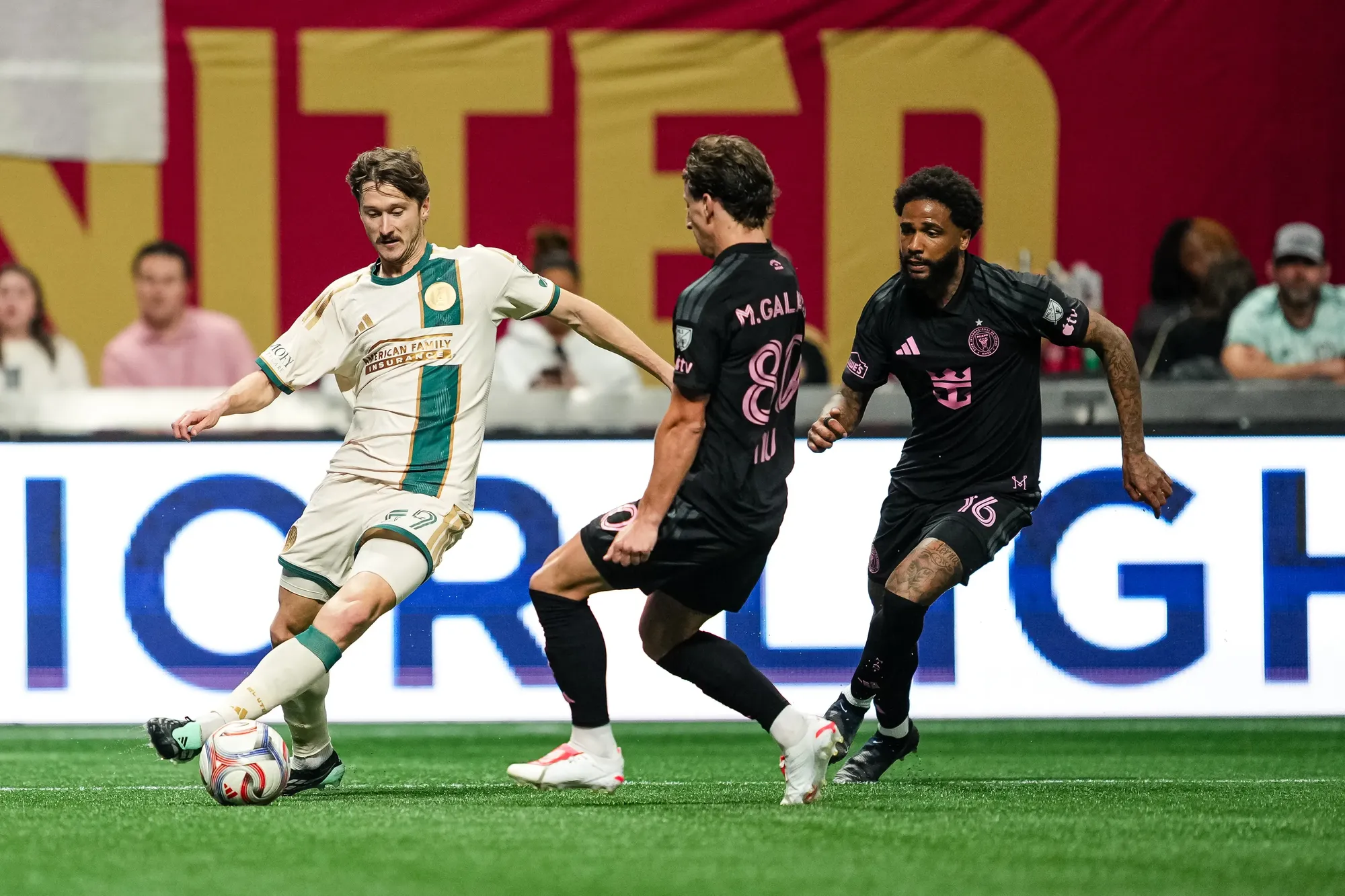
Miami had the kickoff, and moved possession from side to side while Atlanta held a high defensive line. The Five Stripes were disciplined, staying in position and preventing Miami from getting into the penalty area. Tristan Muyumba picked off an early pass through the middle, and Atlanta began looking for opportunities to get forward.
Amaro found Embolo inside the box in the eighth minute. Embolo’s first shot went wide, struck a Miami defender, and bounced back to him. He scuffed his second attempt, sending the ball toward Muyumba, who wasn’t expecting it. Muyumba tried to get a shot away, but the ball went wildly off target. Atlanta had created an early opportunity and wasted it with three poor attempts.
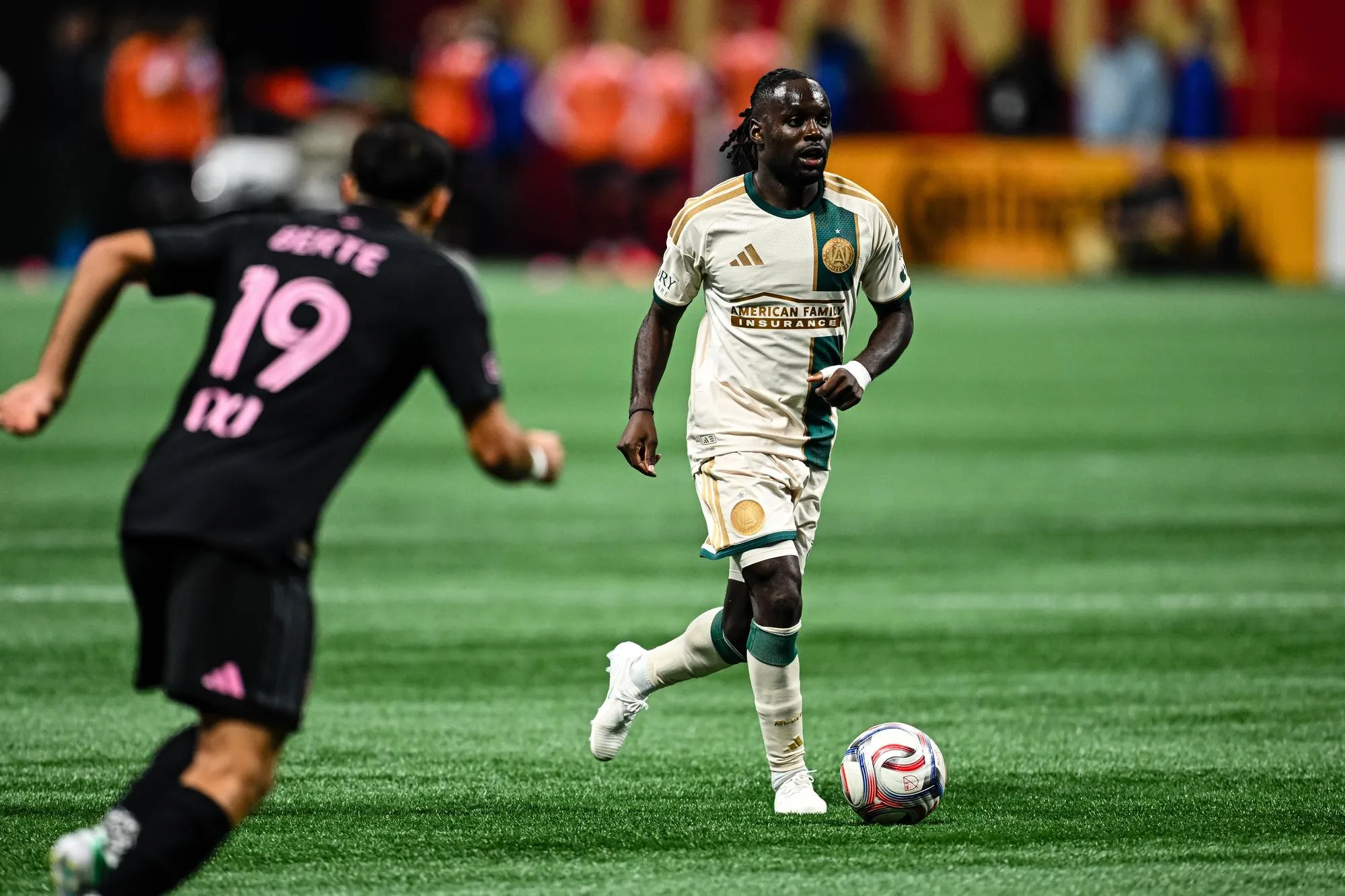
Miami was trying to work its way through Atlanta’s defense. Messi slipped a wonderful ball through the back line to Suárez, who was in a dangerous position near goal. Suárez sent a cross toward the center, but Amaro read it and intercepted. He quickly moved the ball to Muyumba, who spotted Embolo further forward. Muyumba tried to curl a pass into his path, but the ball was too close to a Miami defender.
Atlanta was finding room down the left, while Miranchuk began causing problems on the right. He stripped possession from Miami deep in its own half, although there were too many defenders nearby to turn the recovery into a scoring chance.
Miami responded with a series of quick passes that sent Messi toward the penalty area. The final ball was chipped over Atlanta’s defenders, but Díaz anticipated it and beat Messi to the ball.
Miranchuk dropped deep to collect possession and found himself under pressure from former Atlanta United midfielder Matías Galarza. He held off the challenge, spun around Galarza, and left him in his dust. Báez was also getting involved on the left, winning a physical battle with Gonzalo Luján as the two fought for possession up the pitch.
By the 20th minute, Atlanta was beating Miami to many of the loose balls. Muyumba was particularly impressive, moving across the midfield to intercept passes and then joining the attack. Amaro and Jacob combined down the right, with Jacob sending a first-time cross into the middle. Muyumba attempted an ambitious bicycle kick, but couldn’t get his shot on target. He was clearly enjoying himself.
Embolo dropped deeper to collect passes, using his strength to keep possession and work his way toward the corner. He collected a long pass from Hoyos, carried the ball toward the right corner, and delivered a cross that Miami put behind for a corner. Embolo was smiling afterward.
Miranchuk intercepted another Miami clearance deep in the visitors’ half. Atlanta was still putting Miami under pressure, but the Five Stripes needed to score before halftime provides Miami to reorganize itself. Atlanta couldn’t afford to let all this good work go to waste.
Messi reminded Atlanta of the danger at the other end. He accelerated down the right and drove toward the corner of the penalty area, where Báez brought him down. Messi took the free kick himself, sending the ball toward the near post. Hoyos reacted quickly and made an important save.
Atlanta immediately broke forward. Muyumba was knocked down near the center circle, but Almirón continued the attack and reached Miami’s back line. His cross was deflected behind for a corner. During the sequence, Embolo also managed to strip Messi of possession after the ball had come back to the Argentine. Atlanta had the ball, but again couldn’t get it into the final third.
And then Miami scored.
Messi headed the ball toward Suárez, who received it inside the penalty box. Suárez turned and sent a cross toward the far post, where Germán Berterame was completely unmarked. Berterame headed the ball over Hoyos and into the net, giving Miami a 1-0 lead just before halftime.
2nd Half
Miami was noticeably late returning from the locker room. Atlanta had been back on the pitch for several minutes before the visitors finally emerged. Muyumba and Embolo approached the Ref to complain about the delay.
Within five minutes of play resuming, it became clear that Miami had made tactical adjustments during break. The visitors were keeping more of the ball and finding space in areas Atlanta denied them in the first half. Atlanta was suddenly struggling to win possession and regain control of the midfield. Martino needed to respond quickly, whether through personnel changes or adjustments to Atlanta’s formation, before Miami took complete control.
Atlanta managed to get forward when Amaro spun away from pressure and moved the ball toward Báez. Miranchuk collected the ball and looked to set up his familiar left-footed shot. With no opening available, he passed to Almirón, who quickly fired over the goal.
Atlanta broke forward with Almirón carrying the ball through the middle. Four Miami players closed in around him, while Embolo raced forward into open space on the right. Almirón waited too long to make the pass, then tried to lift the ball over the defenders. Miami intercepted it, drawing groans from the crowd.
Moments later, Messi made Atlanta pay.
Messi slalomed through Atlanta’s defenders, passing to Berterame before continuing his run into the box. He collected the return pass and kept going, slipping past mark after mark. He nutmegged both Díaz and Hoyos to score. What an incredible run! He was simply unstoppable. Messi raced toward the left corner and jumped in celebration.
Atlanta broke forward, with Almirón carrying the ball through the middle. He spotted Jacob on the right and tried to release the pass earlier than his preivous mistake, but sent it too close to a Miami defender.
Then Messi struck again. Suárez sent a beautiful outside-of-the-foot pass into Messi’s path. He charged toward the penalty area with two Atlanta defenders in front of him. Messi swept past Alonso, sending him to the ground, then cut left and fired a low shot into the right corner. Messi scored twice in five minutes. He rolled back the years with this run. Miami led 3-0.
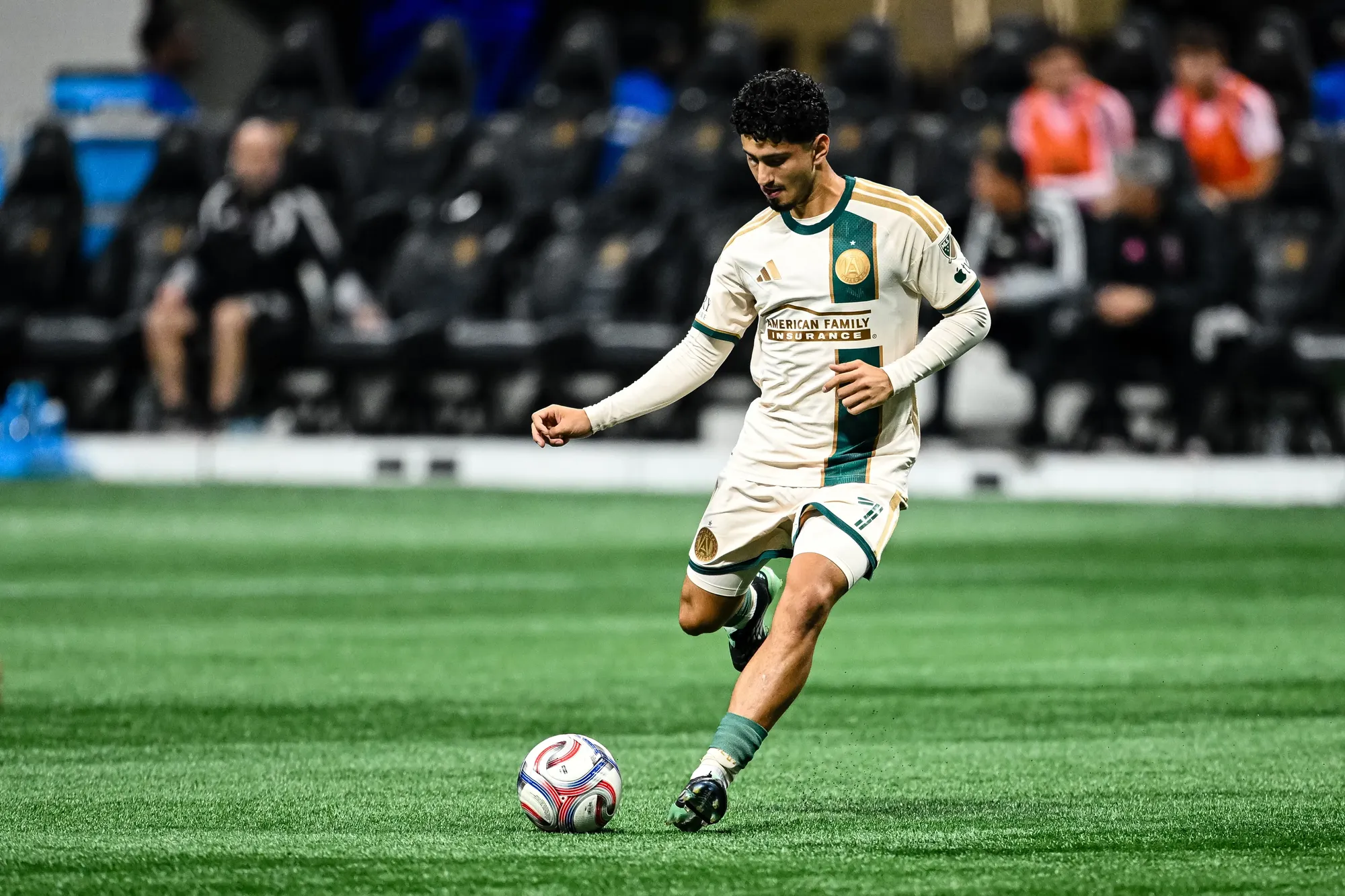
Martino replaced Muyumba with Steven Alzate in the 61st minute.
Alonso intercepted a Miami pass and carried the ball up the pitch. He sent a hard pass toward Galoppo, who was under pressure and fouled as he received the ball. Atlanta earned a free kick just outside the arc. Miranchuk took the shot, but couldn’t get past the wall.
Messi carried the ball down the right before cutting toward the center, turning Alzate as he looked for an opening. He spotted Berterame unmarked on the left and tried to send the ball across. Díaz anticipated the pass and headed it out for a corner. During the ensuing play, the ball struck Díaz’s arm inside the penalty area. The Ref immediately pointed to the spot. Díaz had his back to the ball and appeared to have no idea it was coming. After a VAR review, the Ref determined that Suárez had pushed Díaz, causing the handball. No pen.
Martino finally made three more changes around the 80th minute. Picault, Cooper Sanchez, and Matt Edwards replaced Almirón, Galoppo, and Báez.
Edwards took up a position on the left and began pushing forward. He collected the ball near the corner of Miami’s penalty area, turned, and fired a shot past St. Clair. The ball struck the right post and bounced away.
Embolo received the ball inside the box under pressure. He did well to hold them off, turning and sending the ball toward Picault in the middle. Falcón brought Picault down, and the Ref pointed to the spot. Picault stepped up and drove his shot toward the right corner. St. Clair guessed correctly and got a hand to the ball, but Picault had struck it too hard for the goalkeeper to make the save. Atlanta finally scored, cutting Miami’s lead to 3-1.
Picault explained afterward that he was looking to play directly and get involved in the attack. I tried to use Breel [Embolo] as much as I could, see him, get into spaces and be present, wanting the ball and trying to make things happen. Fafà Picault, Atlanta United Striker - Post-Game Press Conference 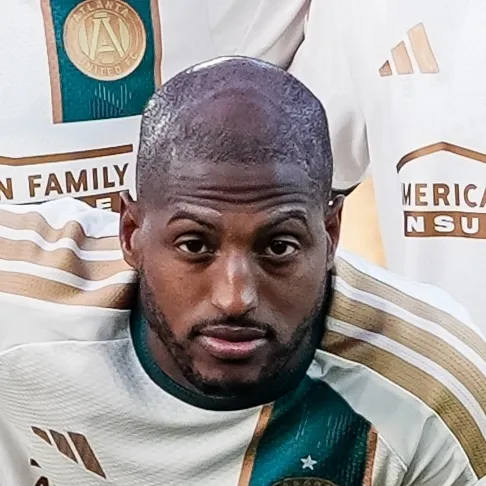
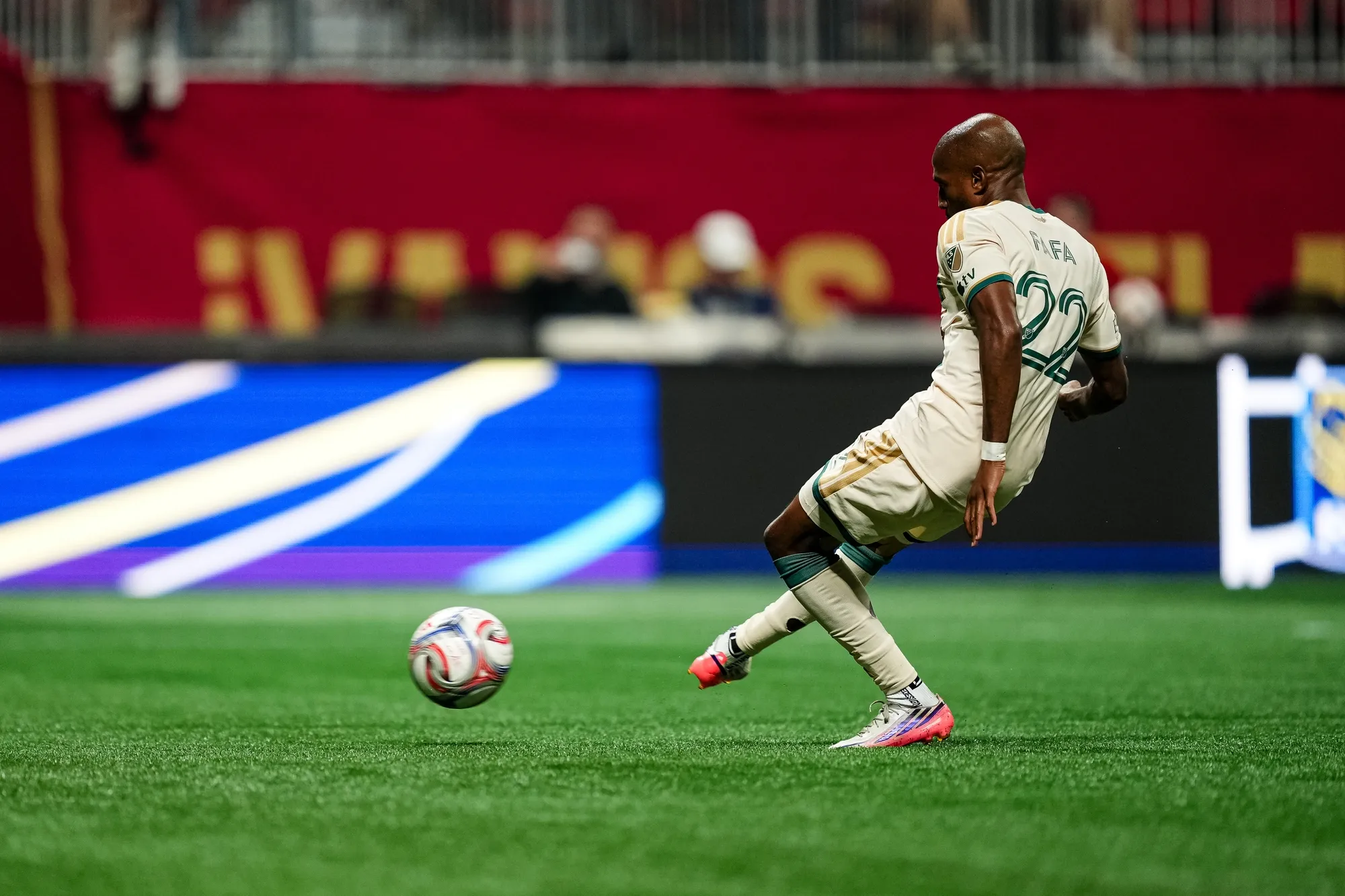
Deep into stoppage time, Alonso intercepted a pass intended for Messi and took possession. Miami began slowing the game down, and Martino threw his hands up in frustration when Picault failed to apply pressure. Picault responded by closing down the ball. Alonso later carried the ball forward as Atlanta tried to counterattack. Messi pulled him down to stop the break and received a yellow.
Atlanta kept trying, managing a couple more shots in the final minutes. Nothing came of them though, and the Ref blew the final whistle on Miami’s 3-1 victory.
Closing Thoughts
The Five Stripes finished with 21 shots and 2.3 xG, compared with Miami’s seven shots and 1.4 xG. And yet, only three of Atlanta’s attempts were on target. Miami put five on frame and scored three.
The first half was particularly encouraging. Atlanta’s midfield was active, and the players were working together to cut off Miami’s passing lanes. Muyumba was having one of his better performances, Amaro was disrupting attacks through the center, and Miranchuk was forcing mistakes further up the pitch. Embolo was also contributing with his hold-up play, even if he wasn’t providing much of a threat in front of goal.
As has been the case all too often, the team cannot put the ball on target. Atlanta was getting into dangerous positions without capitalizing, and there was always the danger that Miami would eventually find a way through.
Martino was particularly pleased with the way Atlanta played in the first half. For 56 minutes we played - for me the first half was by far one of the best of the championship, but with teams that play like they're in a different sport and whose goals just fall into the net, if you don't score goals, you know they'll score some against you. Tata Martino, Atlanta United Head Coach - Post-Game Press Conference 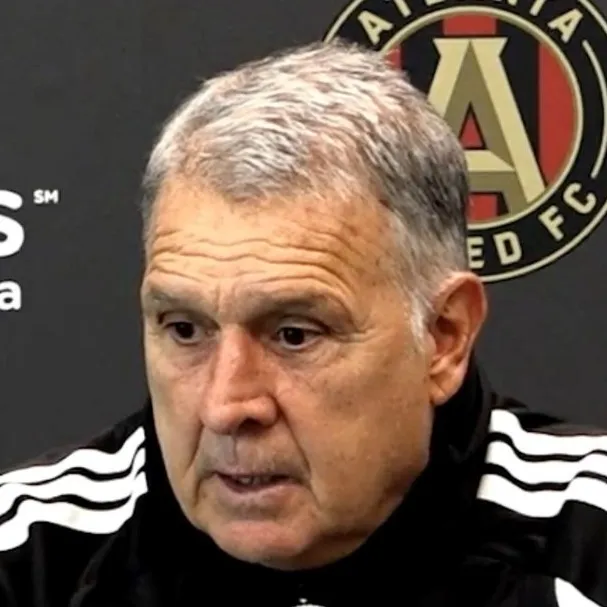
The frustrating part is that Atlanta had been playing well enough to deserve a lead. I was concerned about what would happen after halftime if the Five Stripes didn’t score. Miami had struggled to move through Atlanta’s midfield, and I expected the visitors to make adjustments during the break.
They did. Miami found more space and kept possession, while Atlanta struggled to win the ball back. ATLUTD was no longer able to control the midfield, and the defensive organization that had been so effective earlier began breaking down. Martino saw the match differently. He rejected the suggestion that Miami’s opening goal had affected Atlanta’s mentality, pointing instead to the chances Atlanta created early in the second half. No, because in the first ten minutes of the second half we had two clear scoring opportunities. No, what changed the game were Messi's two goals - the one in the 56th minute and his second goal in the 60th minute. Tata Martino, Atlanta United Head Coach - Post-Game Press Conference
Almirón certainly had an excellent opportunity to equalize. He acknowledged afterward that his missed chance might have changed the game. I think if I had managed to score the equalizer, it might have been a different game, but unfortunately it wasn't. Miguel Almirón, Atlanta United Forward - Post-Game Press Conference 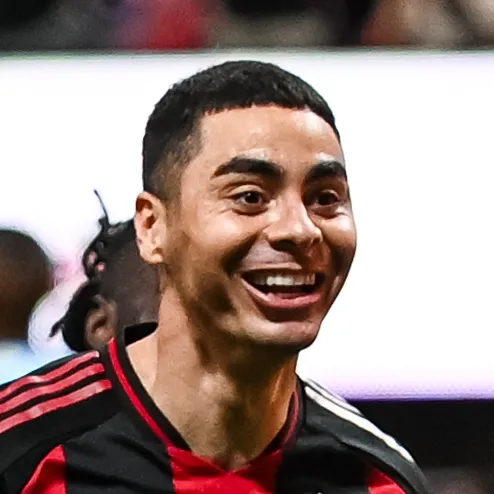
But Atlanta was already having trouble dealing with Miami’s change in tactics. By the time Messi scored his first goal, the visitors were slicing through Atlanta’s midfield. Messi’s individual brilliance made those problems much worse. Martino’s response was difficult to understand. Atlanta needed changes early in the second half, yet he waited until the 61st minute to replace Muyumba with Alzate. He then waited nearly another 20 minutes before making three more substitutions. By then, Atlanta was trailing 3-0.
Those late substitutions made an immediate difference. Edwards was aggressive down the left and nearly scored with an excellent shot. Picault brought more direct running to the attack, helped get the ball into dangerous positions, and converted the penalty he earned.
Picault acknowledged the difficult situation he entered. Obviously, it was 3-0 when I checked in, so it would have taken awhile to get back into the match, but I just wanted to do my best. Fafà Picault, Atlanta United Striker - Post-Game Press Conference
Atlanta’s problems weren’t limited to Martino’s substitutions. The finishing was poor, and Almirón struggled to make good decisions when the Five Stripes broke forward. His work rate was never in question, but several promising attacks ended with a misplaced pass or a wasted opportunity. Embolo was more effective when he dropped deeper to collect possession than when he operated as Atlanta’s striker.
Defensively, the difference between the two halves was striking. Atlanta’s backline looked organized early, and Báez was particularly aggressive in his challenges. After the break, Miami found more space, and Atlanta’s defenders struggled to deal with Messi. Alonso and Díaz continued making interventions, but neither could stop Miami from breaking through.
Martino argued afterward that Atlanta’s overall performance was better than the team’s earlier 2-2 draw in Miami. There were reasons to be encouraged by the first half, but the match also showed how quickly Atlanta can lose its way when an opponent changes its approach.
Atlanta cannot depend on its original game plan working for 90 minutes. When an opponent makes adjustments, Martino needs to be willing to change his approach, whether that means altering the formation, changing personnel, or asking his players to play differently. Against Miami, he waited until the match was effectively lost before making meaningful changes.
Atlanta’s individual performances are covered here.
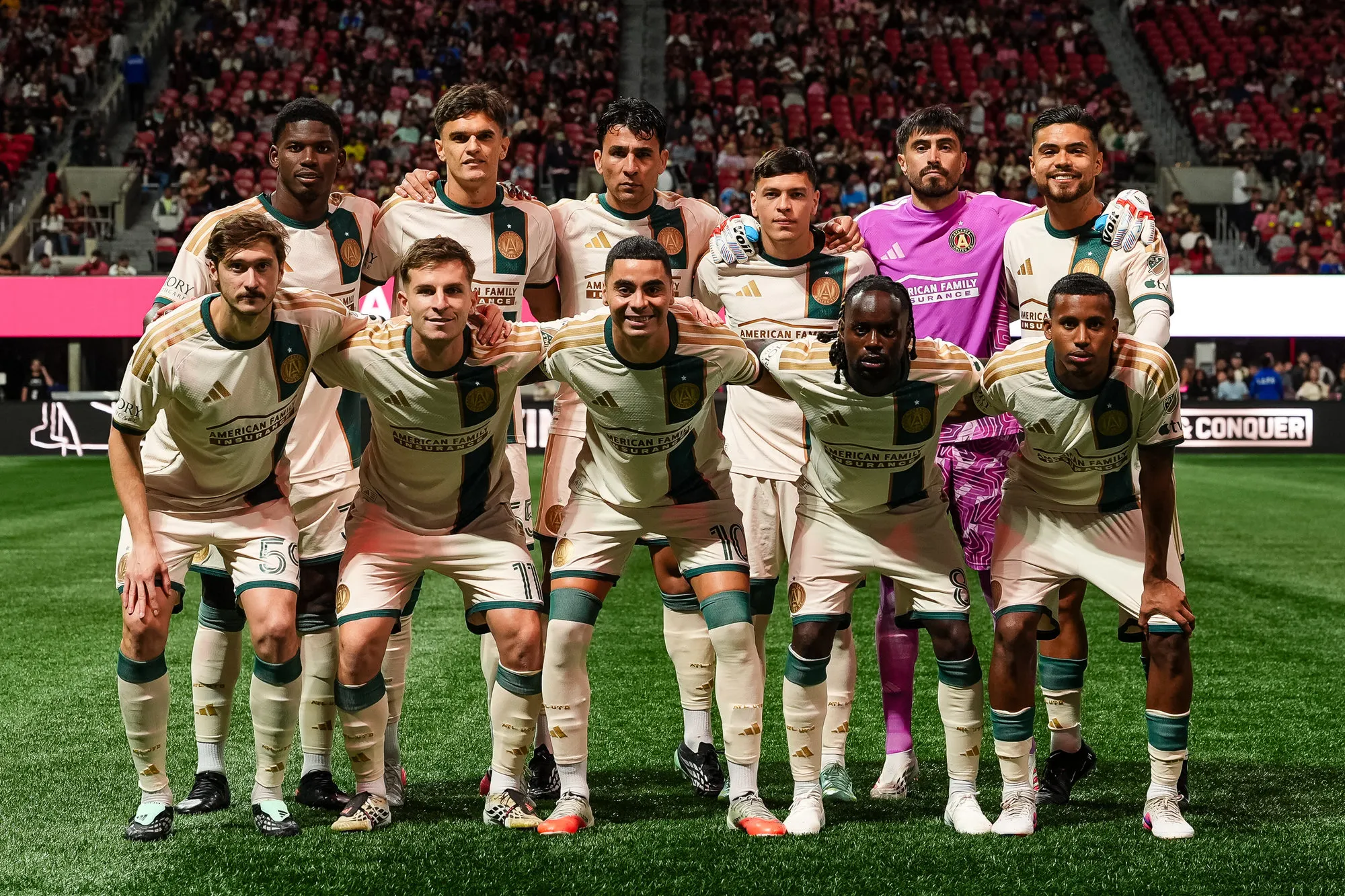
Player Impressions: ATLUTD 1-3 Inter Miami
Muyumba dominated the early midfield battle, while Almirón struggled in the final third. Miami took control after halftime, and late contributions from Edwards and Picault showed what Atlanta might have gained from earlier changes.

Comments
Comments and reactions are powered by GitHub Discussions. A GitHub account is required to comment, reply, or react. You will be asked to authorize Giscus to post through your GitHub account. Comments are screened automatically. Personal attacks, discriminatory language, threats, spam, and comments unrelated to the article will be hidden or removed.